AA19

Less admin, absorbed by AI

Admin work is the tax on a growing service company. Invoices typed twice, permits chased by text message, receipts photographed and forgotten, and a Sunday spent reconciling the week. AA19 builds the paperwork layer so the office stops running on memory and evenings.

TL;DR

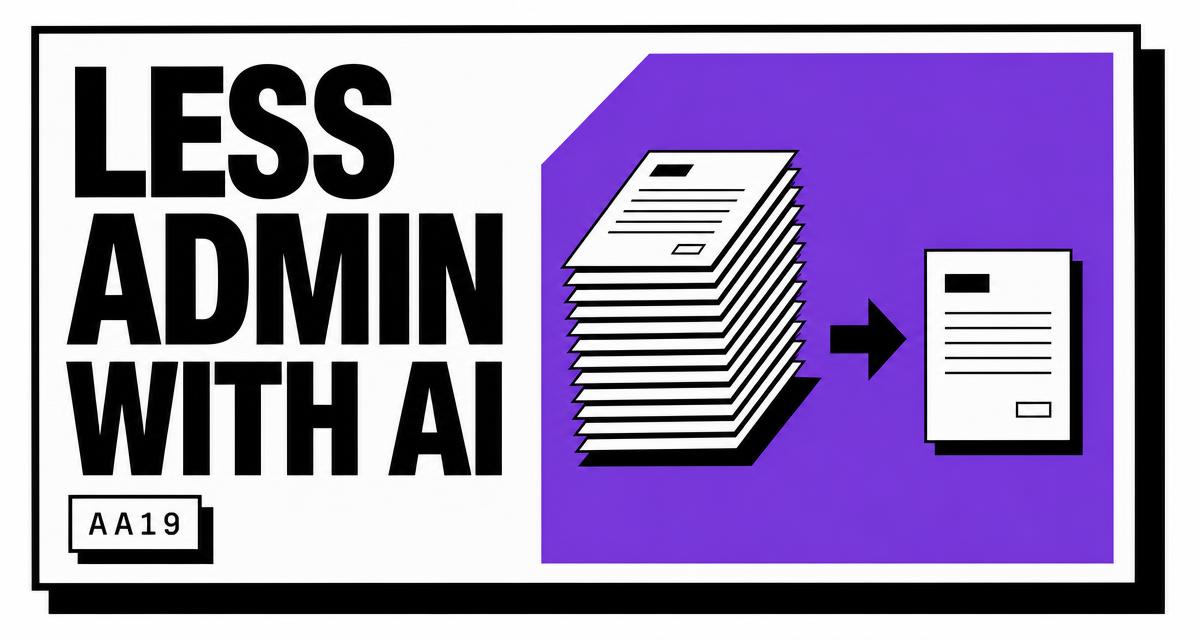
AI reduces admin by running invoicing, document generation, data entry, job costing, and approval routing as governed workflows. Staff review exceptions rather than processing every transaction by hand.

01How it works

Less admin, produced by a system.

01

Where the hours go

Duplicate entry between the CRM, the accounting system, and the field app. Manual invoice creation from job notes. Change orders written twice. Compliance documents assembled by hand for each new commercial client.

None of it produces revenue directly, and all of it grows linearly with job count. Headcount ends up hired to keep pace with paperwork rather than to serve customers.

02

Workflows that run without supervision

A completed job converts to an invoice with line items pulled from the work order, photos attached, and payment terms applied. Payment status syncs back to QuickBooks.

Documents get generated from templates: contracts, change orders, warranty registrations, inspection reports, COI requests, and lien waivers. Signatures collect on the same thread.

Job costing pulls labor hours, material costs, and subcontractor invoices into a margin number per job rather than a quarterly guess.

03

Governance keeps it safe

Spend caps, approval thresholds, and QA gates stay under owner control. Anything executed without a human gets logged with the reasoning preserved, which makes the record reviewable at any time.

Exceptions surface with context: an invoice above the auto-send threshold, a change order that moves margin, a document missing a required field.

02Who it fits

Companies this applies to.

Any office drowning in paperwork. Construction firms handling submittals and change orders, remodelers tracking allowances, property managers coordinating work orders across buildings, accounting practices processing client documents, insurance agencies chasing renewals and certificates, law firms assembling intake packets, and every trade sending invoices.

04Measurement

Numbers that prove it moved.

Metric 01

Admin hours per week

Measured before the build and tracked against job volume after.

Metric 02

Days sales outstanding

Invoice send speed and payment collection cycle.

Metric 03

Exception rate

Share of transactions requiring a human decision, trending down over time.

Metric 04

Cost per job processed

Back office labor cost divided by completed jobs.

What a build costs
One-time build. $500 to $10k.

Scope drives the number. Systems, trades, and custom pieces are all listed on the pricing page.

See pricing →
05FAQ

Questions owners ask about this.

Does this integrate with QuickBooks?

Yes. Invoicing, payment status, and job costing sync so the books stay in one place.

Can approvals stay with the owner?

Thresholds get set by dollar amount, customer type, or margin impact. Anything above the line waits for a person.

What about documents unique to the company?

Templates get built from the documents already in use, including formatting, terms, and required disclosures.

Is there a record of automated actions?

A decision history covers anything executed without human review, with the inputs and reasoning preserved.

Will the office staff lose their jobs?

Coordinators shift to customer work and exception handling. Capacity grows without adding an administrative hire.

[ Ready ]

Less Admin With AI, built around the way the company runs.