AA19

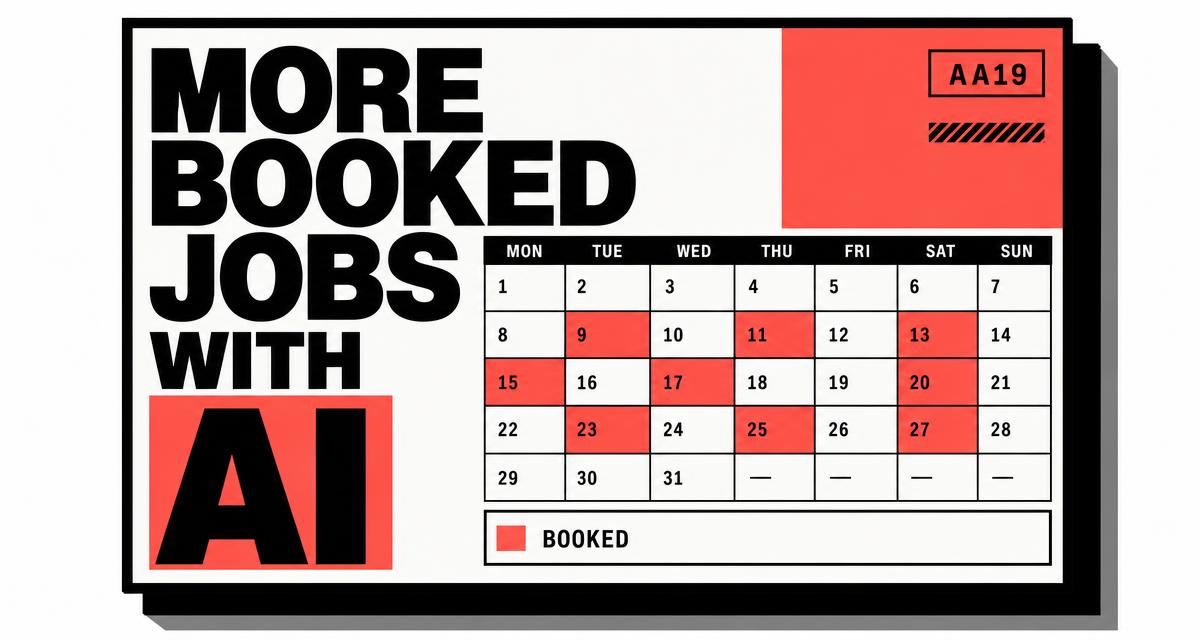
More booked jobs, filled by AI

Booked revenue is the number that pays the crew on Friday. A calendar with two open windows on Wednesday and a cancellation at 10am is a payroll problem. AA19 builds the booking flow, the reminder cadence, and the backfill logic around the way dispatch already assigns work.

TL;DR

AI books more jobs by converting inbound interest into a confirmed slot against live crew capacity, travel zones, and job duration, with reminders, deposits, and waitlist backfill protecting the calendar. Revenue rises from the leads already arriving.

01How it works

More booked jobs, produced by a system.

01

Interest expires fast

A homeowner researching a water heater replacement at 9pm has three tabs open. Voicemail loses that customer. A booking flow that prices, confirms, and sends a calendar invite keeps them.

The system holds slots against real constraints: crew skill, job duration, drive time, permit lead time, and equipment availability. Nothing gets promised that dispatch cannot deliver.

02

Protecting the slots already sold

Reminders go out on a cadence tuned to the trade, with a confirm-or-reschedule link. Deposits or a card on file gate the appointments with a history of walking away.

A cancellation triggers an offer to the waitlist ranked by proximity, job value, and urgency. Open windows fill in minutes rather than sitting empty.

03

Capacity as a growth lever

Booked hours against available hours, by crew and by service line, shows where the ceiling sits. Utilization at 62 percent means the answer is scheduling discipline, not another truck.

Seasonal demand gets shaped in advance. Reactivation offers pull maintenance work into slow weeks, which flattens the swing between a packed August and an empty February.

02Who it fits

Companies this applies to.

Companies selling time on a calendar. HVAC teams running maintenance agreements, cleaning companies packing recurring routes, dentists filling hygiene columns, med spas managing provider chairs, pest control routes on quarterly cycles, plumbers holding emergency capacity, and property managers coordinating vendor access.

04Measurement

Numbers that prove it moved.

Metric 01

Lead to booked rate

Share of inbound conversations that end with a confirmed slot, split by source.

Metric 02

Crew utilization

Booked hours against available hours, by crew and service line.

Metric 03

No-show rate

Tracked against reminder cadence and deposit policy.

Metric 04

Backfill speed

Minutes from cancellation to a refilled slot.

What a build costs
One-time build. $500 to $10k.

Scope drives the number. Systems, trades, and custom pieces are all listed on the pricing page.

See pricing →
05FAQ

Questions owners ask about this.

Will online booking overload the schedule?

Availability gets gated by crew skill, job duration, travel zone, and daily load caps, so the board stays realistic.

Can deposits be required for certain jobs?

Yes. Deposit rules can vary by service type, ticket size, distance, or customer history.

Does it work with the calendar already in use?

Slots write into ServiceTitan, Jobber, Housecall Pro, or Google Calendar, so the field crew keeps the app already on their phone.

What happens with emergency calls?

Severity triage routes urgent work to on-call capacity and pushes flexible jobs, with the customer notified and offered an alternate window.

Can it fill slow seasons?

Reactivation and maintenance campaigns target the gap weeks in advance using service history and last visit date.

[ Ready ]

More Booked Jobs With AI, built around the way the company runs.